Home / Treatments
Treatments
Specialist care that saves natural teeth
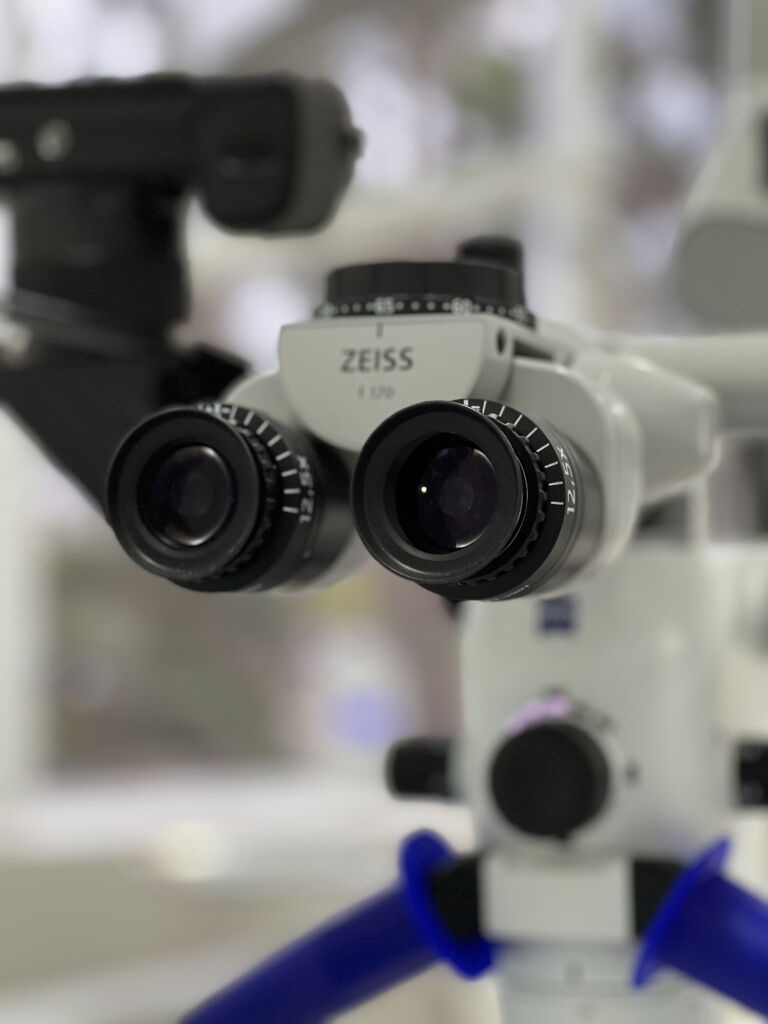
Six treatments, one aim: relieve the pain and keep your own tooth. Every procedure is performed by a specialist endodontist under the microscope.
What we treat
Six ways we can help
Scan the list, find your situation, and we will confirm the right option at your first visit.
Root canal treatment
Removes infected or inflamed pulp, then cleans, disinfects and seals the root canal system so the tooth can be kept.
Helps when
- Persistent or severe toothache
- Lingering sensitivity to hot or cold
- Swelling, tenderness or an abscess
Usually 1 to 2 visits
Root canal re-treatment
Removes the earlier root filling, treats any remaining infection and reseals the tooth.
Helps when
- Pain or infection returns after earlier treatment
- A treated tooth never fully settled
- New decay or a leaking filling lets bacteria back in
Usually 1 to 2 visits
Endodontic surgery
Microsurgery, such as apicoectomy, to remove infected tissue at the root tip and seal the root end.
Helps when
- Infection persists after root canal treatment
- Re-treatment is not possible or advisable
- A lesion at the root tip needs investigation
Usually 1 visit, plus review
Vital pulp therapy
Treats exposed or inflamed pulp while keeping it alive, using biocompatible materials. A conservative option for suitable teeth.
Helps when
- Deep decay reaches the pulp of an otherwise healthy tooth
- Young teeth with roots still developing
- Selected adult teeth
Often a single visit
Dental trauma
Urgent assessment and treatment for teeth that are knocked, cracked or displaced. Early care gives the best chance of saving the tooth.
Helps when
- A tooth is knocked out or loosened
- A tooth is fractured
- Pain or colour change after an injury
Same-day for emergencies
Tooth pain diagnosis and second opinions
Specialist testing and imaging to find the true source of pain before any irreversible treatment.
Helps when
- Pain that is hard to locate
- Your dentist is unsure whether a root canal is needed
- You want a second opinion before an extraction
1 visit
Inside the tooth
What root canal treatment changes inside the tooth
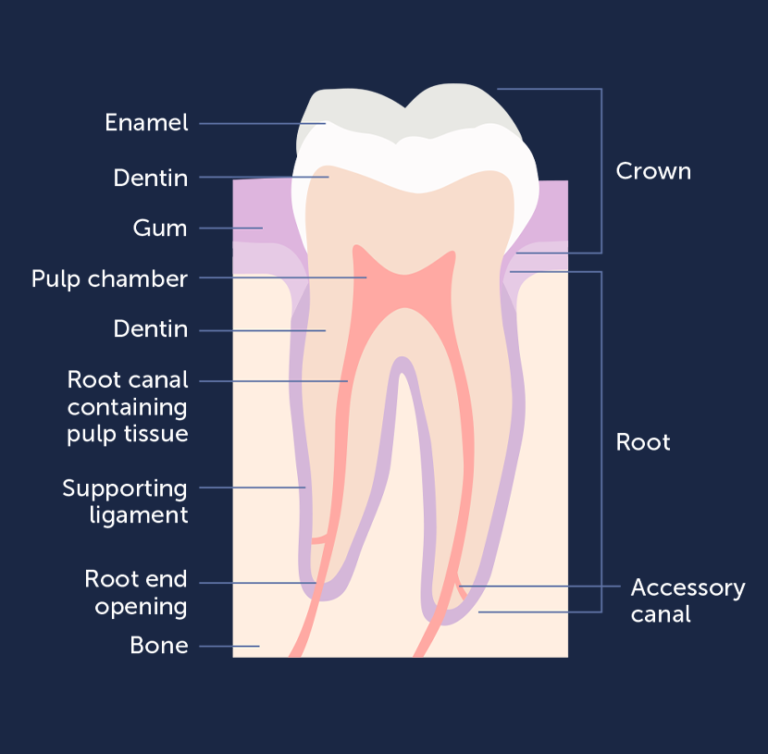
Endo means inside and odont means tooth. Endodontic treatment deals with the living tissue inside the tooth.
A healthy tooth
Enamel and dentin protect the pulp, which runs from the crown through the root canals to the root tips.
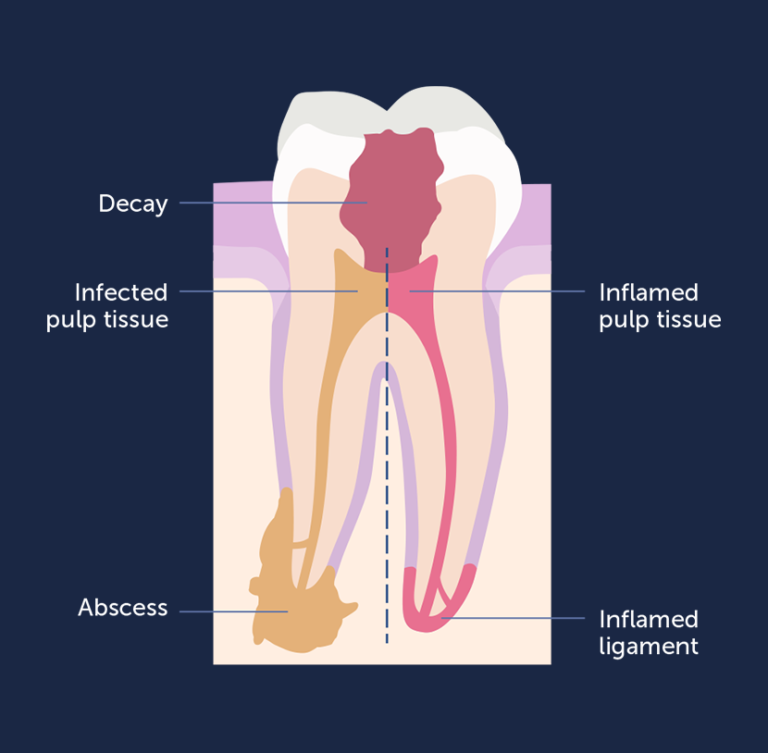
An infected and inflamed tooth
Decay has reached the pulp. The pulp is infected and inflamed, and an abscess has formed at the root tip.
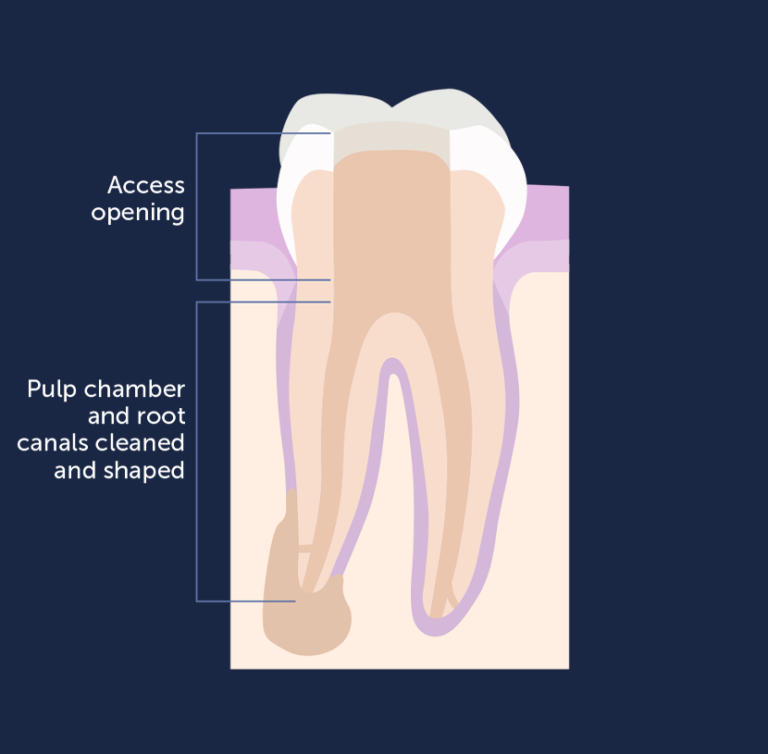
Canals cleaned and shaped
The pulp has been removed through a small access opening, and the pulp chamber and root canals cleaned and shaped.
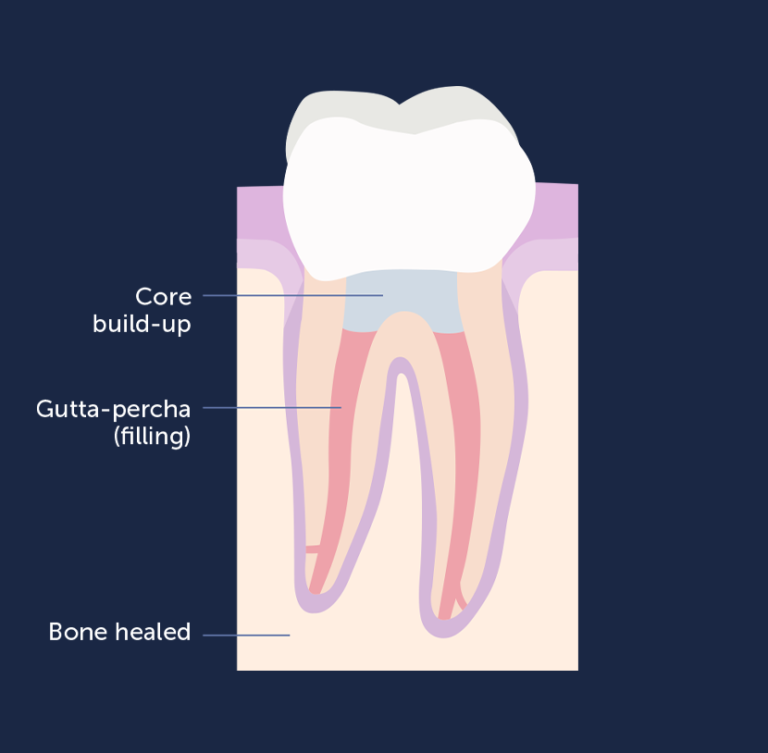
Restored and healed
The canals are filled with gutta-percha, a core build-up supports the crown, and the bone around the root has healed.
Questions you may have before you book
Frequently Asked Questions
Short answers to what patients ask most about treatment. Call us if your question is not here.
Is root canal treatment painful?
Treatment is done under local anaesthetic. Some tenderness for a few days afterwards is normal and can be relieved with over-the-counter or prescription medication. Every tooth is different, so we do not promise a completely pain-free recovery.
How long will the tooth last?
With specialist treatment and proper care, a tooth that has had root canal treatment should last a lifetime. Returning to your dentist promptly for the final filling or crown is an important part of that.
Will I need a crown afterwards?
Often, yes, especially for back teeth, which take heavy chewing forces. We place a temporary filling and send your dentist a report recommending the most suitable permanent restoration.
I had a root canal years ago and it hurts again. What now?
A previously treated tooth can become painful or re-infected months or years later. Re-treatment or, in some cases, endodontic surgery can usually remove the infection and let the tooth heal again. Book an assessment and we will explain your options.





Ready to take the next step?
Request an appointment and we will reply within one business day. No referral needed.