Home / Our services / Root canal treatment
Root canal treatment
Specialist root canal treatment in North Lakes
When the inside of a tooth is infected, inflamed or damaged, root canal treatment can help manage the problem and preserve your natural tooth.
What to expect
What root canal treatment involves
Removing diseased pulp does not mean removing the tooth. The hard tooth structure stays in place and can keep working once it is restored.
What happens
The inflamed or infected pulp is removed from inside the tooth, with the aim of keeping the natural tooth.
The canals are then
- Cleaned and shaped
- Disinfected
- Filled and sealed
Why an endodontist
Endodontics is our clinical focus, especially where the diagnosis or the inside of the tooth is complex.
Canals can be
- Very narrow or curved
- Extra or calcified
- Difficult to access
Specialist technology
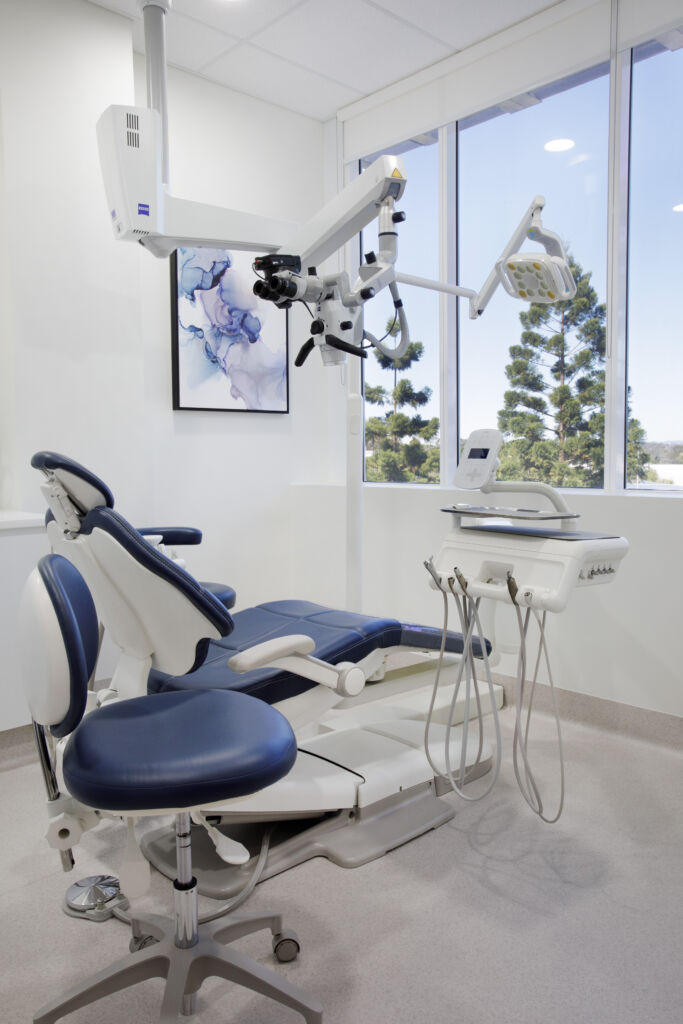
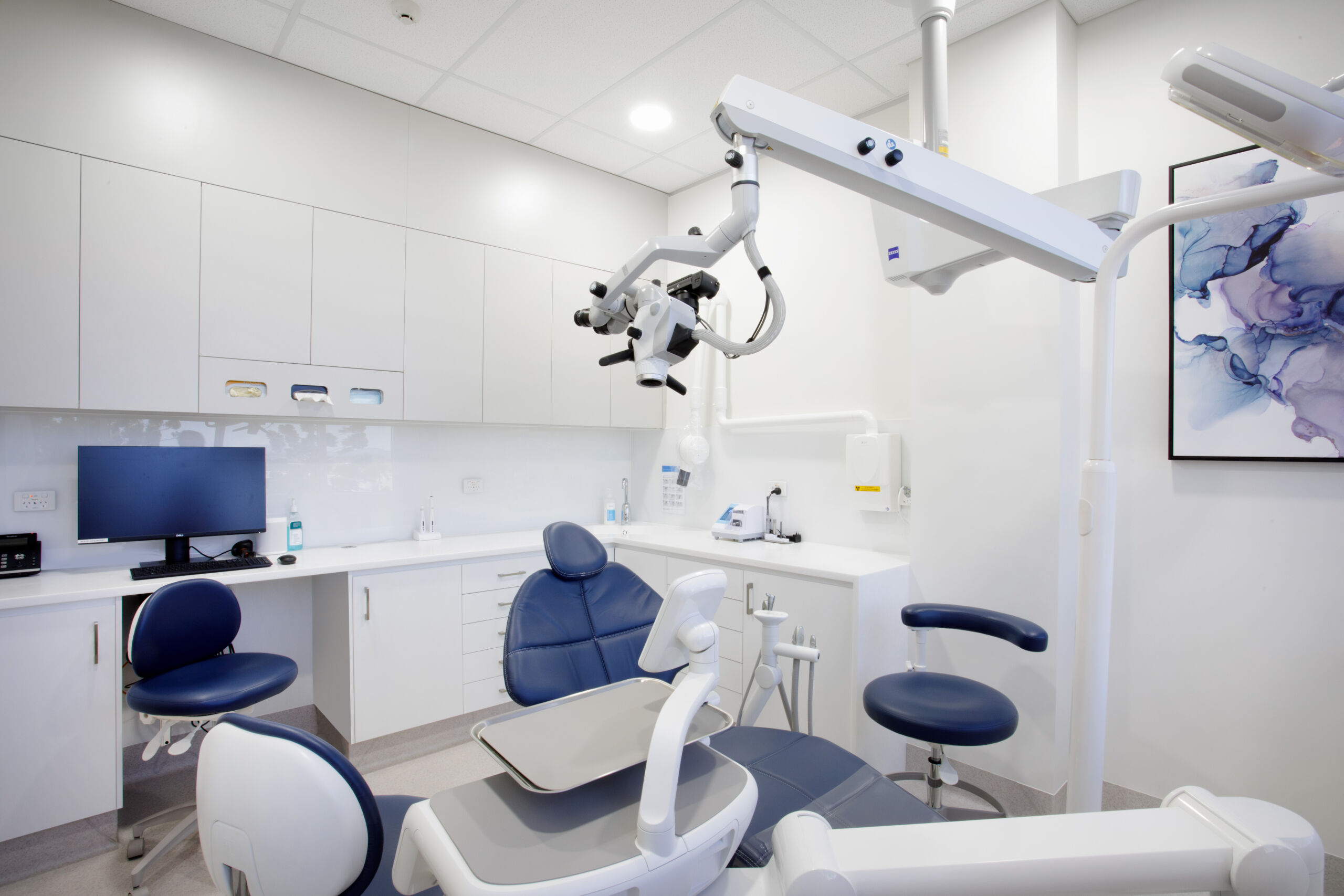
Magnification, light and imaging help us examine very small areas inside the tooth in greater detail.
May include
- Dental operating microscopes
- Fluorescence and digital imaging
- 3D scanning where appropriate
How many visits
Your endodontist explains the expected treatment plan after assessing your tooth.
Depends on
- The tooth and its canals
- Infection or inflammation
- Previous dental treatment
Commonly 1 to 2 visits
Inside the tooth
What root canal treatment changes inside the tooth
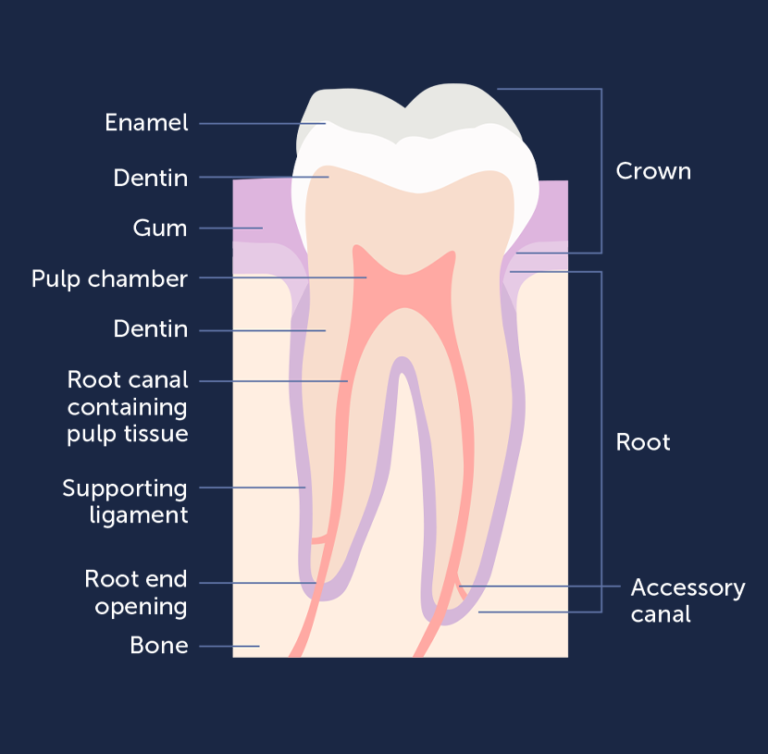
Endo means inside and odont means tooth. Endodontic treatment deals with the living tissue inside the tooth.
A healthy tooth
Enamel and dentin protect the pulp, which runs from the crown through the root canals to the root tips.
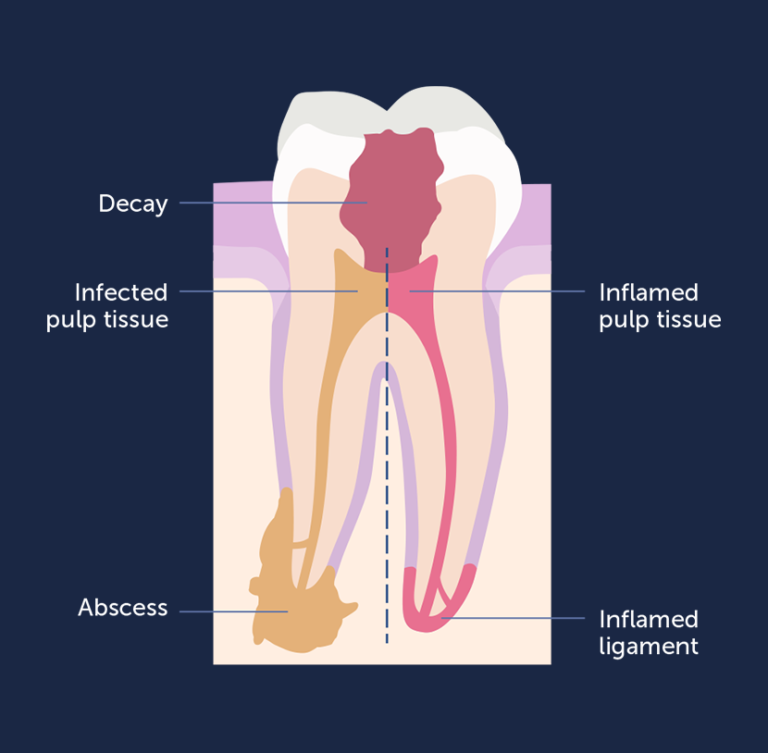
An infected and inflamed tooth
Decay has reached the pulp. The pulp is infected and inflamed, and an abscess has formed at the root tip.
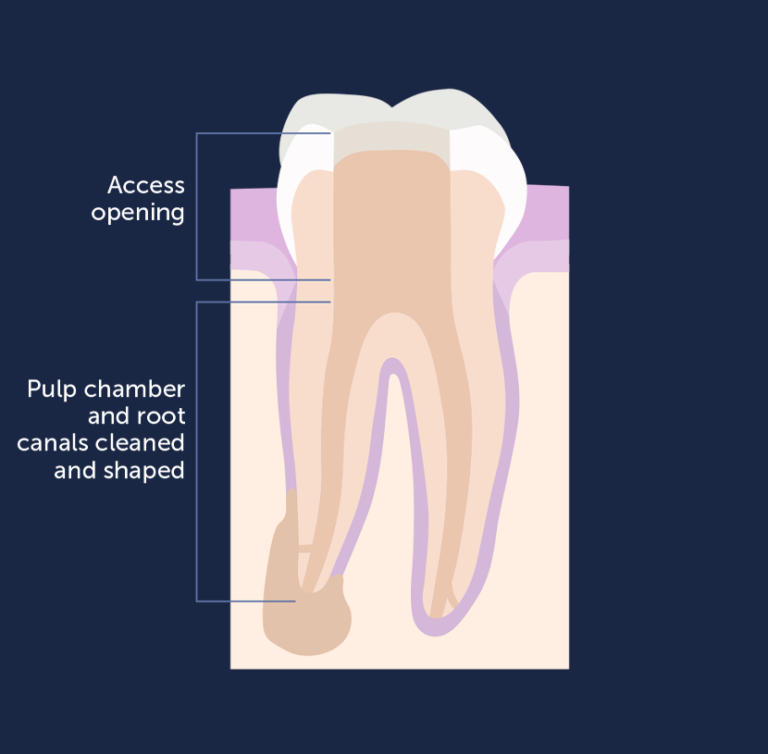
Canals cleaned and shaped
The pulp has been removed through a small access opening, and the pulp chamber and root canals cleaned and shaped.
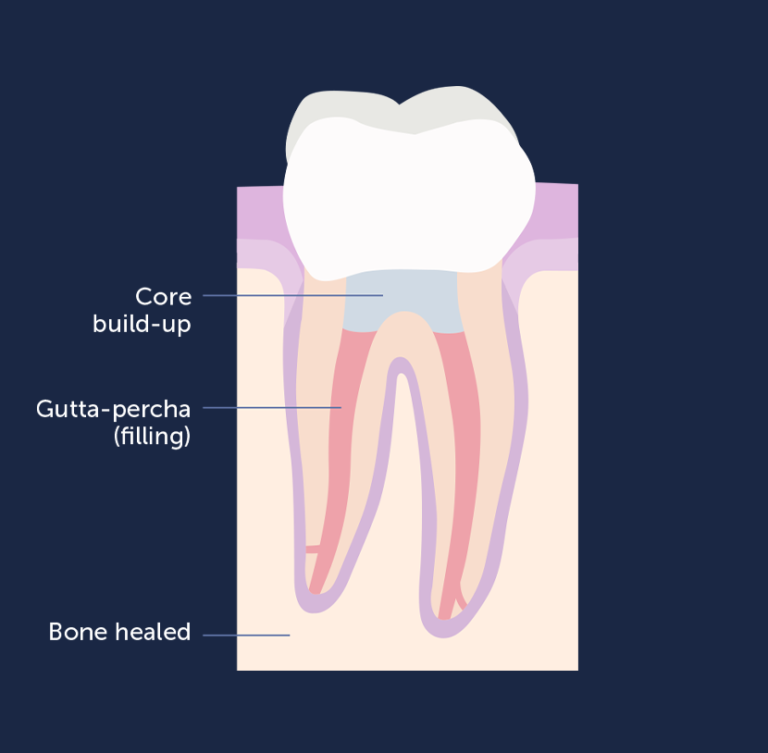
Restored and healed
The canals are filled with gutta-percha, a core build-up supports the crown, and the bone around the root has healed.
Your comfort
Worried about root canal treatment?
Fear of root canal treatment is common, often because you do not know what it will feel like, or you are already in pain.
✓
Local anaesthetic is routinely used
✓
Treatment targets the inflamed or infected tissue behind your symptoms
✓
Some tenderness can occur afterwards while the tissues settle
✓
Anxious? Tell us before your visit so we can discuss pain management or sedation
Every patient and every tooth is different, so we do not promise treatment or recovery will be completely pain-free.
Talk to us about your concerns →Afterwards
What happens after treatment?
You will get aftercare instructions for your procedure. Call us if swelling or discomfort does not settle as expected.
✓
The tooth still needs a permanent filling, crown or other restoration
✓
The restoration protects the remaining tooth and seals it
✓
Referred patients return to their regular dentist for ongoing care
✓
Saving the tooth helps keep your bite, chewing and the tooth's position

Root canal treatment questions
Questions patients often ask
Short answers to what patients ask most about root canal treatment. Call us if your question is not here.
Does root canal treatment hurt?
Local anaesthetic is routinely used during treatment. Some tenderness may occur afterwards while the tissues around the tooth recover, and individual experiences vary.
How long does root canal treatment take?
Treatment is commonly completed over one or two appointments. The exact sequence depends on the tooth and how complex the case is.
Will I need a crown afterwards?
Some root canal-treated teeth need a crown, while others are restored differently. Your endodontist and general dentist can advise what is appropriate for your tooth.
How can I know if root canal treatment is right for me?
A specialist assessment allows your endodontist to evaluate your symptoms, examine your tooth and explain the options available to you.





Tooth pain or infection? Get a specialist assessment
Persistent pain, swelling, deep decay or a cracked tooth may mean a problem with the pulp. An assessment finds the source and whether root canal treatment can help preserve your natural tooth.